Man’s Generous Job Offer Rejected by Panhandler, So He Responds with a Bold Public Message
A Simple Act of Kindness Turns into a Bold Statement as a Panhandler Rejects a Job Offer, Sparking a Community Debate on Charity and Responsibility
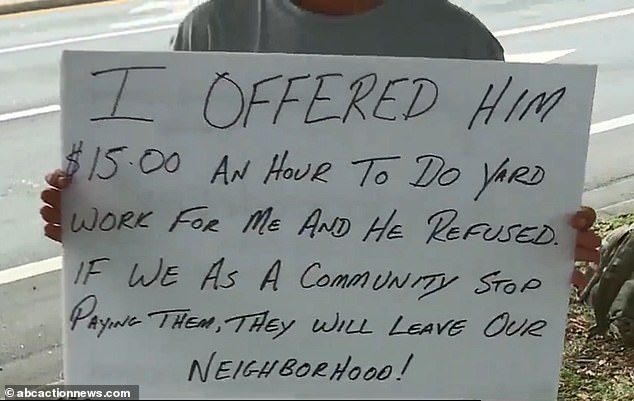
Kindness Met With Resistance: A Surprising Encounter Between a Good Samaritan and a Panhandler
In our daily lives, we often come across situations that challenge our perspectives on kindness, work, and self-sufficiency. Ryan Bray, a compassionate individual known for helping others, found himself in one such moment. On a typical Sunday, as he was returning home from work, Bray noticed a familiar scene—a panhandler asking for spare change on a street corner in his neighborhood.
Unlike many others who may have dropped a coin or passed by without a second thought, Bray was determined to make a more meaningful impact. His heart went beyond simply giving a few coins. Instead, he wanted to offer the man a way out of his situation—a chance for honest work.




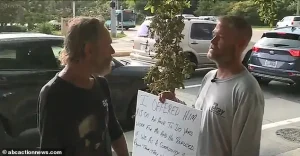
A Well-Intentioned Offer
Bray approached the man with an offer that he hoped would change his life. Rather than just handing over change, Bray proposed something far more valuable: a job. He offered the panhandler a role at his family business, paying $15 an hour. The opportunity to work for a fair wage could be the first step towards self-reliance and stability, or so Bray believed.
However, things took an unexpected turn. The panhandler, rather than being grateful or interested in the opportunity, scoffed at the idea. According to Bray, the man was dismissive and outright refused the job offer. The beggar explained that he could make more money from begging than from any job Bray might offer. This response left Bray taken aback, challenging his belief in helping those in need through work rather than handouts.

From Compassion to Confrontation
As Bray processed the rejection, he began contemplating his next steps. The beggar’s response did not sit well with him, especially since the man had shown hostility when Bray attempted to negotiate a higher wage. The incident left Bray feeling as though his offer had not only been rejected but had been met with disdain. He saw it as more than a refusal of work—it was a challenge to his values of hard work and effort.
Determined not to let the situation slide, Bray decided to take a more unconventional approach to the matter. Returning home, he crafted a sign of his own. But this was no ordinary sign—it was a direct response to the panhandler’s refusal. Bray took the sign back to the same street corner, making his stance clear for all to see. His message condemned the panhandler’s lack of ambition and laziness, urging the public to reconsider how they contributed to this lifestyle.

Two Sides to Every Story
The panhandler, who chose to remain anonymous, had a different perspective on the encounter. Speaking to reporters in Florida, he claimed that Bray had exaggerated the details. According to him, there was never a formal job offer, just a brief interaction. The panhandler explained that he wasn’t begging out of choice, but out of necessity, trying to earn enough to escape the streets one day at a time.
From the beggar’s perspective, the money he made from begging was his lifeline. Each penny was a step closer to improving his situation. For him, the offer Bray mentioned wasn’t about a job, but more about getting the help he needed to survive. The panhandler’s version of events paints a picture of someone caught in a cycle of poverty, fighting against the odds to make it day by day.
The Debate Over Begging and Charity
Bray’s actions sparked a heated debate in the local community and beyond. Many people shared his sentiment that simply giving money to beggars wasn’t solving the underlying issues. Bray firmly believed that by discouraging people from handing out money on the streets, individuals like the panhandler would be motivated to seek out better opportunities—like the job he had offered.
Standing at the street corner with his sign, Bray’s resolve only strengthened. He saw the situation as a turning point—a chance to raise awareness about the complex nature of begging and charity. For him, giving money to panhandlers wasn’t just enabling them to stay on the streets—it was contributing to a larger problem.
A Deeper Reflection on Compassion and Responsibility
The incident highlights a broader conversation about the balance between compassion and responsibility. On one hand, Bray’s desire to offer honest work came from a place of empathy. He wanted to provide a long-term solution, not just a quick fix. On the other hand, the panhandler’s refusal reflects the harsh realities of poverty—sometimes, people choose survival over opportunities that seem too difficult or distant.
What complicates the situation further is the hostility that can arise when such offers are made. The tension between helping people in a way that aligns with our values and the lived experiences of those in poverty creates a gap that is difficult to bridge. Both Bray and the panhandler had valid concerns, but their perspectives couldn’t be reconciled in that moment.
The Aftermath: A Community Divided
In the wake of the incident, opinions were divided. Some supported Bray’s approach, agreeing that more sustainable help—like jobs—was the answer. Others sided with the panhandler, empathizing with his difficult situation and understanding why someone might turn down such an offer. The debate continues, with people questioning what true kindness looks like and how best to help those in need.
For Bray, the situation only reaffirmed his beliefs. He continues to stand by his decision to make the sign, hoping that it will inspire others to reconsider how they offer help to those on the streets. Meanwhile, the panhandler remains a reminder that, sometimes, the help we offer doesn’t align with the needs of those we’re trying to assist.